
Sustainability Hub | Sustainable industrial technology, powered by IR & UV
Innovation should go hand in hand with social responsibility. At Victory, sustainability and social responsbility are part of how we design, manufacture, package and deliver every IR and UV product.
Our UV LED and infrared technologies are helping businesses across manufacturing, printing, water treatment and beyond to cut energy use, reduce emissions and replace outdated processes with cleaner, more efficient alternatives. At the same time, we're working hard to make our own operations greener, from the packaging we use to the vehicles on our forecourt.
Through our Sustainability Hub, we’re sharing the stories, ideas and technologies that are helping us reduce our environmental impact. From energy-efficient lighting to eco-conscious packaging and greener transport.

- Educational videos hosted by Will Childs, exploring each sustainability topic in depth
- In-depth blogs and guides breaking down each topic
- Downloadable fact sheets and infographics
- News and updates from our own sustainability initiatives
Episode 1 – Introduction to the Victory Sustainability Series
Meet Will Childs and discover why sustainability is an important part of our corporate responsibility.
Victory has been manufacturing IR and UV systems and products in the UK for over 30 years. That experience gives us a unique vantage point: we understand the operational pressures our customers face, and we're building our sustainability initiatives around solutions that deliver real commercial value alongside genuine environmental benefit.
This opening episode introduces Will Childs, sets out what the series covers, and why it matters. From the energy demands of industrial heating to the environmental legacy of mercury-based UV systems, we look at the challenges our industry faces and the practical, proven solutions that are already making a measurable difference.
Read our full Corporate Responsibility commitment.
Episode 2 – UV LED vs Mercury Lamps: Energy Savings and Safety in UV Curing
Why we've phased out mercury-based UV products, and what we replaced them with.
For decades, mercury arc lamps were the standard technology for UV curing across printing, coatings, adhesives and electronics manufacturing. They work — but they come with significant drawbacks: high energy consumption, hazardous mercury content, short lamp lifespans, ozone generation and the ongoing cost and disruption of frequent replacements.
Victory made a deliberate decision to phase out mercury-based UV products and transition our range to UV LED curing systems. The environmental and commercial case was compelling.
UV LED vs mercury: the key differences in energy and sustainability:
- Energy consumption: UV LED systems consume up to 70–80% less energy than equivalent mercury arc lamp systems, with no energy wasted on warm-up cycles or standby power.
- Lamp lifespan: UV LED lamps last up to 40,000 hours — compared to 1,000–2,500 hours for mercury lamps — dramatically reducing replacement frequency, waste, and maintenance downtime.
- Mercury-free: UV LED systems contain no hazardous mercury, eliminating the risk of toxic exposure, the cost of compliant disposal, and the growing regulatory burden under the Minamata Convention and RoHS Directive.
- Instant on/off: Unlike mercury lamps, which require a 10–15 minute warm-up period, UV LED systems activate instantly — meaning no energy is consumed when production lines are paused.
- Lower CO₂ emissions: The combination of reduced energy consumption and longer service life results in a substantially smaller carbon footprint across the system's lifetime.
The results for our customers is lower energy costs, safer working environments, reduced waste and UV curing systems that are ready for the increasing regulatory pressure on mercury use across Europe and North America.
Episode 3 – Shortwave Infrared for Heating: The Energy-Efficient Alternative
How shortwave IR is replacing gas and warm-air heating in factories and warehouses — and why it wins on efficiency.
Heating large industrial spaces (factories, warehouses, workshops, loading bays) is one of the most significant and most wasteful energy costs in manufacturing. Traditional convection systems heat the air, which rises immediately, escapes through open doors, and has to be continually replaced. The result is high energy bills and variable, uncomfortable working conditions.
Shortwave infrared heating works on a different principle: it heats people and objects directly, exactly as sunlight does, without relying on air as the transfer medium. The heat is instant, targeted and does not escape when doors are opened.
The efficiency advantages of shortwave IR heating for industrial spaces:
- Instant heat: Shortwave IR reaches full operating temperature in seconds — no warm-up period, no wasted energy before staff arrive.
- Zone heating: Infrared can be directed precisely to occupied areas — workstations, production lines, loading areas — rather than heating the entire volume of a building.
- Reduced heat loss: Because infrared does not heat the air, it is not affected by air movement or draughts, making it exceptionally well-suited to high-ceiling factories, warehouses with regular door openings, and outdoor or semi-outdoor spaces.
- Energy savings: UK industrial sites replacing gas or warm-air systems with shortwave infrared heating have reported energy savings of up to 30–70% depending on building type and configuration.
- Lower carbon footprint: As the grid decarbonises, electric shortwave IR systems benefit directly — the same unit of energy produces progressively fewer emissions over time, unlike gas heating, which is locked into carbon.
Episode 4 – Shortwave Infrared in Industrial Process Applications: Reducing Emissions in Manufacturing
How IR drying and curing is displacing gas ovens, autoclaves, and thermal processes across industry.
Beyond space heating, shortwave infrared technology has a critical and often underappreciated role in industrial process applications: drying, curing, forming and heat treatment. In many manufacturing environments, these processes are still performed using gas-fired ovens, steam autoclaves or large electric convection ovens, all of which are energy-intensive, slow to respond, and difficult to control with precision.
Infrared energy is absorbed directly by the material being processed, rather than transferred via heated air, the process is faster, more controllable and far more energy-efficient.
Key applications where shortwave IR is replacing gas ovens and traditional thermal processes:
- Paint and coating drying: Automotive, aerospace, and general manufacturing lines are replacing gas-heated ovens with shortwave IR drying systems, achieving faster throughput with significantly lower energy consumption.
- Adhesive and resin curing: IR curing eliminates the need for solvent-based processes and high-temperature ovens in composite and bonding applications.
- Plastic forming and pre-heating: Shortwave IR enables precise, rapid pre-heating of thermoplastic materials without the uneven heat distribution of convection systems.
- Food processing: IR drying and pasteurisation systems deliver hygienic, energy-efficient processing with precise temperature control — reducing both energy use and water consumption compared to steam-based alternatives.
- Textile and paper drying: IR drying lines in paper and textile manufacturing reduce drying time and energy demand compared to cylinder or hot-air drying.
The result is a direct reduction in both energy costs and carbon emissions — and for sites seeking to move away from gas entirely, shortwave IR drying and curing provides a credible, proven electric alternative with measurable ROI.
Episode 5 – EV Charging at Victory: Supporting Greener Travel for Staff and Visitors
One of many steps we're taking to reduce the transport emissions associated with our site.
Transport is one of the most significant contributors to carbon emissions for any business, both through fleet operations and daily staff commuting. We've installed EV charging points at our Leighton Buzzard HQ to make it easier for employees and visitors who drive electric vehicles to choose greener travel without worrying about range.
It's a relatively small investment but one that signals intent and removes a practical barrier. We're actively monitoring uptake and plan to expand charging capacity as EV adoption among our team grows.
Episode 6 – UV-C Wastewater Systems: Enabling Water Reuse Across Industry
How UV-C disinfection technology is helping manufacturers and water operators repurpose and recycle water safely.
Water scarcity is an increasingly urgent issue for industrial operations worldwide. Municipalities, manufacturers, and utilities face growing regulatory and commercial pressure to reduce freshwater consumption, treat wastewater to a reusable standard and demonstrate responsible water stewardship. UV-C disinfection technology is one of the most effective and environmentally friendly tools available to meet this challenge.
Unlike chemical disinfection methods such as chlorination, UV-C treatment inactivates bacteria, viruses, and other pathogens by disrupting their DNA, without adding any chemicals to the water and without generating harmful disinfection by-products. The treated water can then be safely reused in industrial processes, irrigation, or discharged into the environment.
Victory's UV-C wastewater systems are designed for industrial-scale applications, offering:
- Chemical-free disinfection — no chlorine, no by-products, no chemical handling or storage requirements
- High throughput — systems designed to treat large volumes continuously and reliably
- Reuse capability — treated water meets standards for recirculation within industrial processes, reducing freshwater demand
- Low operational costs — UV-C systems have minimal consumable requirements and long lamp service lives
- Compact installation — UV-C systems integrate into existing water treatment infrastructure without major civil works
For industries including food and beverage processing, pharmaceuticals, textiles, and general manufacturing, UV-C wastewater treatment is a practical, proven route to reducing environmental impact and water bills simultaneously.
Episode 7 – Reusable Water Bottles: Eliminating Single-Use Plastic at Victory
A small change in the office, but part of a broader commitment to reducing plastic waste across our operations.
We've replaced single-use plastic water bottles across our sites with reusable alternatives for all staff. It's a simple initiative, but one that reflects our belief that sustainability has to be lived day-to-day, not just communicated externally or confined to product development.
Eliminating single-use plastic from our workplace is one of a number of internal changes we've made as part of our operational sustainability programme. Others include a review of disposable packaging in our kitchen areas, and a drive to reduce consumable waste across our manufacturing and despatch operations. We track progress and report it internally as part of our broader environmental performance monitoring.
Episode 8 – Medium Pressure UV Ballast Water Treatment: Protecting Marine Ecosystems in Commercial Shipping
How medium-pressure UV technology is helping shipping operators comply with the IMO Ballast Water Management Convention.
Every year, ships around the world take on billions of tonnes of ballast water to maintain stability during voyages. When that water is discharged at the destination port, it carries with it microorganisms, bacteria and marine species from thousands of miles away, species that can devastate local ecosystems, outcompete native organisms and cause irreversible harm to biodiversity.
The International Maritime Organisation's Ballast Water Management Convention (BWM Convention), in force since 2017, requires all commercial vessels to treat ballast water to the D-2 performance standard before discharge. UV-based treatment systems have emerged as the dominant technology for compliance, and for good environmental reason: they disinfect without chemicals, generating no harmful by-products and posing no risk to crew safety or aquatic ecosystems at the point of discharge.
Victory's medium-pressure UV systems are used by shipping operators to meet IMO BWM Convention requirements. The key advantages of UV treatment for ballast water:
- No active chemicals — UV treatment inactivates organisms through DNA disruption, with no residual chemicals discharged into the sea
- No disinfection by-products — unlike electrochlorination, UV generates no total residual oxidants (TRO), removing associated environmental and regulatory risks
- Crew safety — no chemical handling, storage, or neutralisation is required
- Effective in all water types — fresh, brackish, and marine applications
- Compact and retrofit-friendly — UV systems can be integrated into existing ballast water infrastructure on both new builds and retrofit vessels
For ship owners and operators navigating IMO compliance deadlines, UV ballast water treatment is the cleanest, simplest and most environmentally responsible route to certification.
Explore Victory UV Germicidal Lamps
→ CTA: Link to: /ultraviolet/germicidal-lamps/ | Suggested anchor text: 'Explore Victory UV Germicidal Lamps'
→ CTA: Downloadable asset: 'IMO BWM Convention — UV Compliance Guide' (link here when published)
Episode 9 – UV-C LED Development for Energy-Efficient Disinfection
Why we're investing in UV-C LED technology, and what it means for the future of disinfection.
Conventional UV-C disinfection systems, used widely in water treatment, air purification, and surface disinfection, have historically relied on low- or medium-pressure mercury lamps. These work well but they carry the same drawbacks as mercury lamps in curing applications: hazardous materials, warm-up times, relatively short lamp lives and the growing regulatory pressure to eliminate mercury from industrial processes entirely.
UV-C LED technology is emerging as the next generation of disinfection: mercury-free, instant-on, highly energy-efficient and capable of being precisely tuned to the 260–280nm wavelengths that are most effective at inactivating pathogens. Victory is investing in the development of UV-C LED systems because we believe this technology will become the new standard for industrial disinfection within this decade.
The advantages of UV-C LED disinfection over conventional mercury-based systems:
- Mercury-free — no hazardous material handling, no special disposal requirements, compliant with global mercury phase-out regulations
- Instant activation — no warm-up period, enabling integration into automated systems with rapid cycling
- Precise wavelength output — UV-C LEDs can be tuned to peak germicidal wavelengths, improving efficacy and reducing energy waste
- Long service life — UV-C LED systems are designed for extended operational lifetimes, reducing replacement frequency and associated waste
- Compact form factor — UV-C LEDs open up new application possibilities in confined or portable disinfection contexts
Our R&D team are always working on new UV-C LED systems for water treatment, surface disinfection and air purification.
Learn about our Innovation & Production Centre
Episode 10 – Eco-Friendly Packaging: Rethinking How We Pack and Ship Our Products
From biodegradable loose fill to recyclable air bags, how we're reducing packaging waste across every order we send.
Packaging is one of those areas where small decisions, multiplied across thousands of orders, add up to significant environmental impact. We've undertaken a comprehensive review of every packaging material we use, from the outer carton to the protective void fill inside, with the goal of eliminating unnecessary plastic and replacing it with recyclable, compostable, or reusable alternatives.
Changes we've already made to our packaging across despatch operations:
- Biodegradable loose fill — replacing polystyrene chips with plant-based, compostable loose fill for void protection
- Recyclable air bags — replacing bubble wrap with recyclable air cushion packaging wherever possible
- Reduced over-boxing — reviewing carton sizing to right-size packaging and eliminate unnecessary material and transport volume
- Recycled content — specifying corrugated cardboard with high recycled content across our carton range
- Supplier standards — working with packaging suppliers who operate to recognised environmental standards
Packaging sustainability is a moving target, and we're committed to continuing to improve. We're currently reviewing labelling materials, tape, and pallet wrap as the next areas for improvement, and we will publish updates here as changes are implemented.
Our commitment goes beyond products, it’s in our people, processes, and partnerships:
- Designing products that reduce environmental impact
- Choosing sustainable materials in manufacturing & packaging
- Supporting local suppliers and UK-based production
- Encouraging greener transport and remote working
- Measuring progress through energy usage and stakeholder feedback
Our Latest Green Thinking
Powering Sustainable Industry with IR and UV Technology
Sustainability in Commercial Lighting: How Victory's UV and IR Solutions Drive Energy Efficiency and Eco-Friendly Industry Practices. Sustainability has become an essential focus for modern businesses, with industries worldwide adopting eco-friendly practices to meet ambitious net-zero targets.
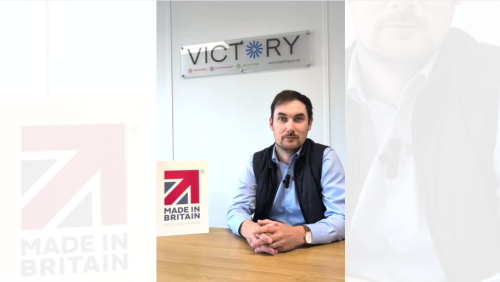
Victory Joins Made in Britain: Celebrating British Manufacturing Excellence
As proud members of Made in Britain, we’re investing in UK manufacturing to deliver trusted quality, faster lead times, and sustainable innovation. We are proud to share that Victory is now an official member of Made in Britain - a mark that recognises our commitment to quality, sustainability, and home-grown innovation.
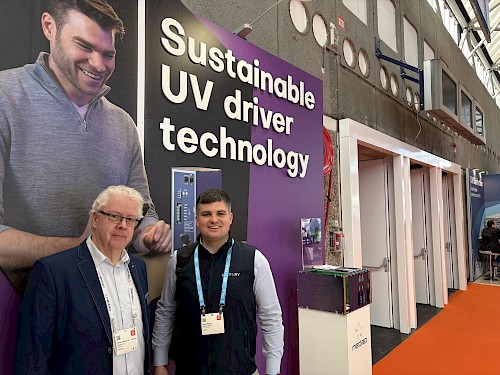
Exploring innovations in water treatment at Aquatech Amsterdam 2025
Last week, the Victory team attended Aquatech Amsterdam 2025, the world’s leading trade exhibition for process, drinking, and wastewater. With over 22,000 water professionals and 900+ exhibitors, Aquatech is a standout event in the global water industry calendar, bringing together innovation, expertise, and collaboration under one roof.